Seolma (설마): The Word K-Dramas Say Right Before Everything Falls Apart
You know this moment even if you’ve never heard the word: a character starts putting pieces together, their face changes, and they whisper 설마… right before the camera cuts to confirm the exact thing they were afraid of. 설마 is the sound of dread arriving a half-second before the truth does.
What 설마 seolma means
설마 (seolma) means “surely not,” “no way,” or “don’t tell me” — it’s what you say when you suspect something terrible is true and you’re desperately hoping you’re wrong. It sits in that specific emotional space between disbelief and dread, which is why it shows up so often right before a plot twist lands. Unlike 진짜? (which reacts to something already said) or 미쳤어? (which reacts to something already done), 설마 usually comes first — it’s the moment of realization, not the reaction to it.
Four moods of one dread
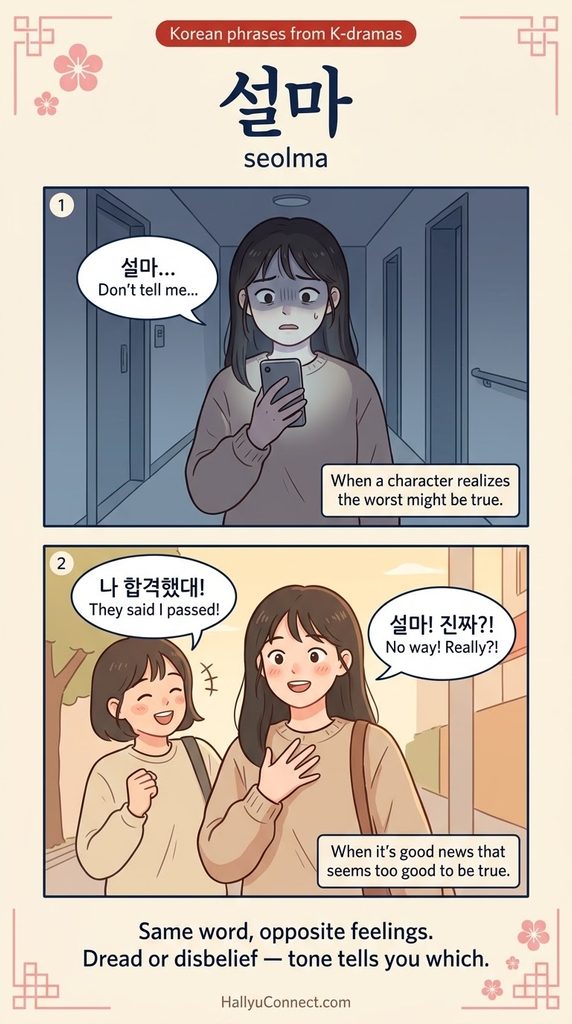
1. The trailing-off 설마…
Meaning: Don’t tell me… No, it can’t be…
How it sounds: quiet, unfinished, often said alone with no one else around to hear it.
Where you hear it: a character piecing together a betrayal, a secret identity, or a hidden connection between two other characters. This is the classic pre-twist 설마.
2. The desperate denial
Meaning: There’s no way. That can’t be true.
How it sounds: shaky, insistent, often repeated: 설마, 설마.
Where you hear it: right after hearing devastating news, a character refusing to accept it before they’ve even confirmed it’s real. Often paired with 설마 그럴 리가 없어 (seolma geureol riga eopseo), “there’s no way that’s true.”
3. The accusing 설마
Meaning: Don’t tell me you actually… / Wait, did you…?
How it sounds: sharper, directed straight at someone, often with narrowed eyes.
Where you hear it: confronting someone with a suspicion, like 설마 몰랐어? (seolma mollasseo?), “don’t tell me you didn’t know?” This version expects an answer, not just a reaction.
4. The lighter, hopeful version
Meaning: No way, really?
How it sounds: surprised but not afraid, sometimes even a little excited.
Where you hear it: reacting to good news that seems too good to be true, like hearing a crush might actually like them back. Not every 설마 has to be dread — this version is closer to disbelieving hope.
Why this word builds suspense so well
설마 works because it names the gap between suspicion and confirmation, the exact space a drama wants you sitting in right before a reveal. Once you can catch it, you’ll notice it almost functions as a warning: whenever a character says 설마, something is about to be confirmed, one way or another.
A note on pronunciation
I’m a K-drama fan learning Korean, not a native speaker. Romanization only approximates Korean sounds, and tone is especially hard to capture in writing, so use the Hangul as your main guide and listen for it the next time you watch. If you spot a mistake, please tell me through the contact page.
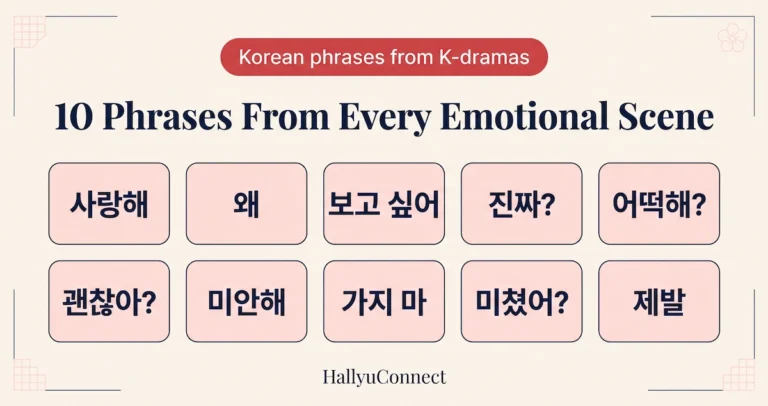
New here? Start with our beginner’s guide to learning Korean from K-dramas. Or see the full set of ten emotional-scene phrases in 10 Korean phrases that show up in every emotional K-drama scene.