Hwaiting (화이팅): Why K-Drama Characters Shout “Fighting!”
If you’ve watched more than a few K-dramas, you’ve probably heard someone shout something that sounds exactly like the English word “fighting,” usually right before a big test, a job interview, or a confrontation nobody’s ready for. It’s not a typo in the subtitles, and nobody’s actually talking about a fight.
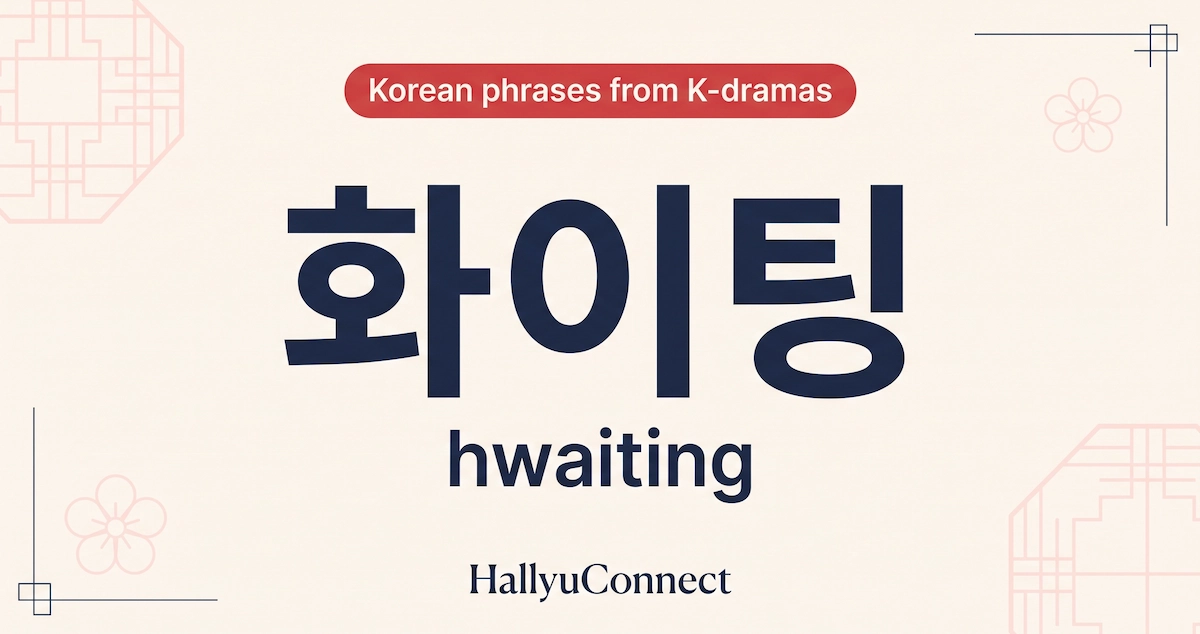
It’s 화이팅 (hwaiting), and once you know it, you’ll hear it everywhere.
What Hwaiting Means
화이팅 (hwaiting), sometimes spelled 파이팅 (paiting), is a cheer of encouragement. The closest English equivalents are “you’ve got this,” “go for it,” or “good luck.” It has nothing to do with physical conflict, even though the word it borrowed from does.
It’s what’s called Konglish, a word built from English but reshaped to do a completely different job in Korean. English “fighting” is about combat. Korean 화이팅 is about rallying someone before a challenge, or psyching yourself up before one.
Quick reference
Hangul: 화이팅 (also written 파이팅)
Romanization: hwaiting / paiting
Meaning: “You’ve got this!” / “Go for it!” / “Good luck!”
Used when: cheering someone on before something hard, or hyping yourself up
Where the Word Came From
화이팅 entered Korean through English, likely picked up around sports commentary and cheering culture, where “fighting spirit” gets shortened to just “fighting” as a rallying cry. Korean absorbed it, dropped the literal fighting part entirely, and turned it into an all-purpose cheer for any kind of effort, not just physical ones.
This kind of borrowing and reshaping is common in Konglish. The word arrives from English, but the meaning that sticks is a Korean one.
How K-Dramas Use It
Once you know to listen for it, hwaiting shows up constantly:
- Before a big moment: a friend grips someone’s shoulders before a job interview or exam and says “화이팅!”
- The fist pump: characters often say it while pumping a fist in the air, sometimes bumping fists together as a shared cheer.
- Talking to yourself: a character alone, staring in a mirror or standing outside a door, will whisper “화이팅” to themselves before walking in.
- Group encouragement: a whole team or family shouting it together before a shared challenge.
It’s rarely subtitled as “fighting,” since that would confuse English viewers. You’ll usually see it translated as “good luck,” “you can do it,” or just left as “hwaiting” with the tone doing the rest of the work.
화이팅 vs 파이팅
Both spellings are used and both are correct. 화이팅 (hwaiting) is slightly more common, but 파이팅 (paiting) shows up just as often, especially in casual writing and fan chants at concerts and sports games. Don’t worry about picking the “right” one. Koreans use both interchangeably.
Using It With a Name
A common pattern is pairing hwaiting with someone’s name, using -아 (-ah) or -야 (-ya) after the name to call out to them directly, like “지수야, 화이팅!” (Jisoo-ya, hwaiting!). This is a warm, casual way to cheer a specific person on, and you’ll hear it constantly between close friends and family in dramas.
As with the honorifics in our Oppa, Unnie, Noona, Hyung post, this name pattern is a marker of closeness. Strangers or acquaintances would just say “화이팅!” on its own.
A note on pronunciation: I’m a K-drama fan and learner, not a native speaker. I’ve checked this against a dictionary with audio, but for pronunciation, native speakers are always the best guide.
Keep Learning
New here? Start with How to Learn Korean From K-Dramas: A Beginner’s Method, or go deeper on a similar word with Gwaenchana (괜찮아) Meaning.