Jebal (제발): The One Word That Turns a K-Drama Scene Desperate
One word, four intensities: how 제발 (jebal) turns an ordinary request into desperate pleading in K-dramas.
One word, four intensities: how 제발 (jebal) turns an ordinary request into desperate pleading in K-dramas.
A head nod, a shoulder bow, or the full 90 degrees — how bowing depth and apology words move together in K-dramas.
Why “no, I’m going” and “yes, I’m not going” are both correct in Korean — the logic behind 네 and 아니요, explained simply.
One sound, five feelings: how Korean’s all-purpose exclamation shifts from pain to pity to delight depending on how it’s said.
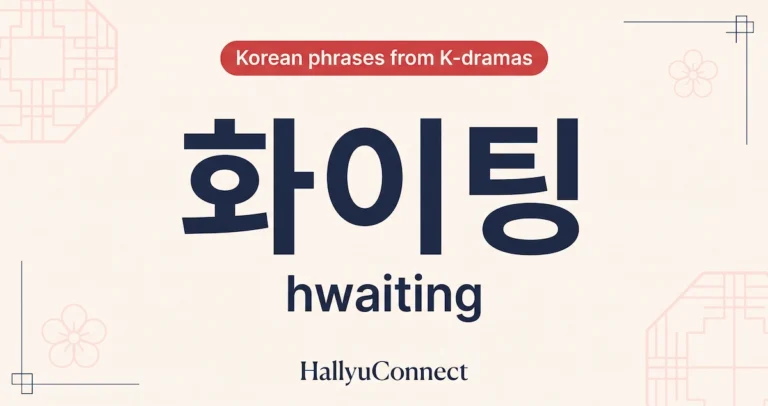
Hwaiting (화이팅): Why K-Drama Characters Shout “Fighting!” If you’ve watched more than a few K-dramas, you’ve probably heard someone shout something that sounds exactly like the English word “fighting,” usually right before a big test, a job interview, or a confrontation nobody’s ready for. It’s not a typo in the subtitles, and nobody’s actually talking…

A simple, practical method for learning Korean from K-Dramas—what to watch for, what to look up, and how to turn scenes into useful Korean.
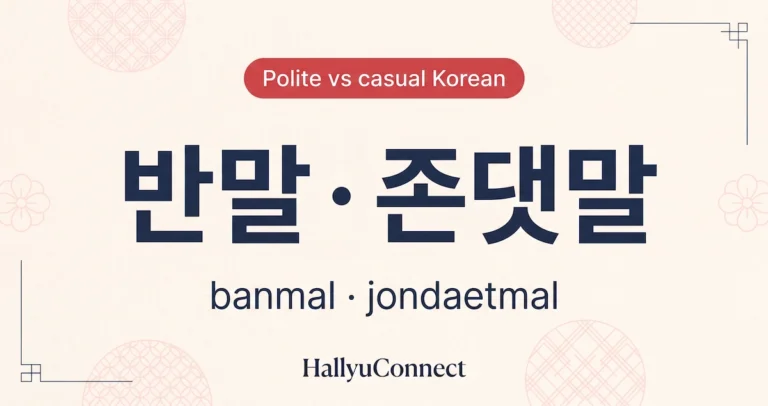
Same sentence, three levels: how switching between casual and polite Korean signals closeness, distance, or a fight in K-dramas.
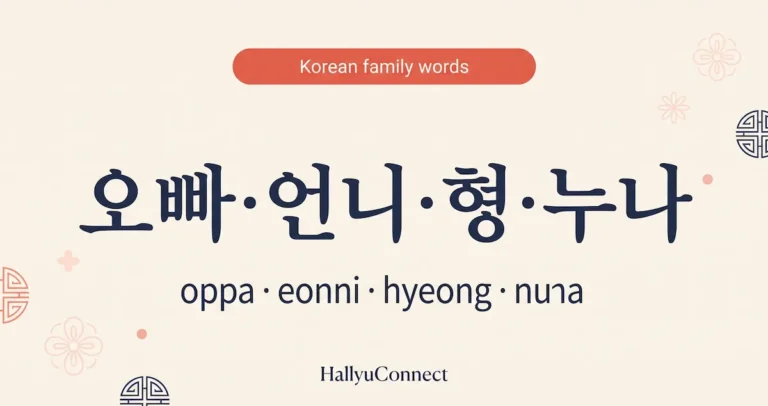
Who says which word, and how it shifts from a sweet request to romance to jealousy in K-dramas.
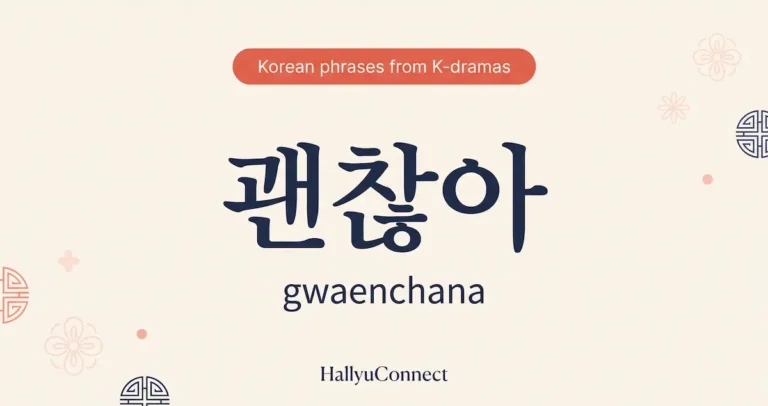
One word, five moods: how tone turns 괜찮아 (gwaenchana) into comfort, a brush-off, or hidden hurt
Five everyday phrases you hear in almost every K-drama, with Hangul, meaning, tone, and casual versions.