Dropping the “Yo”: When K-Drama Characters Switch From Polite to Casual Korean
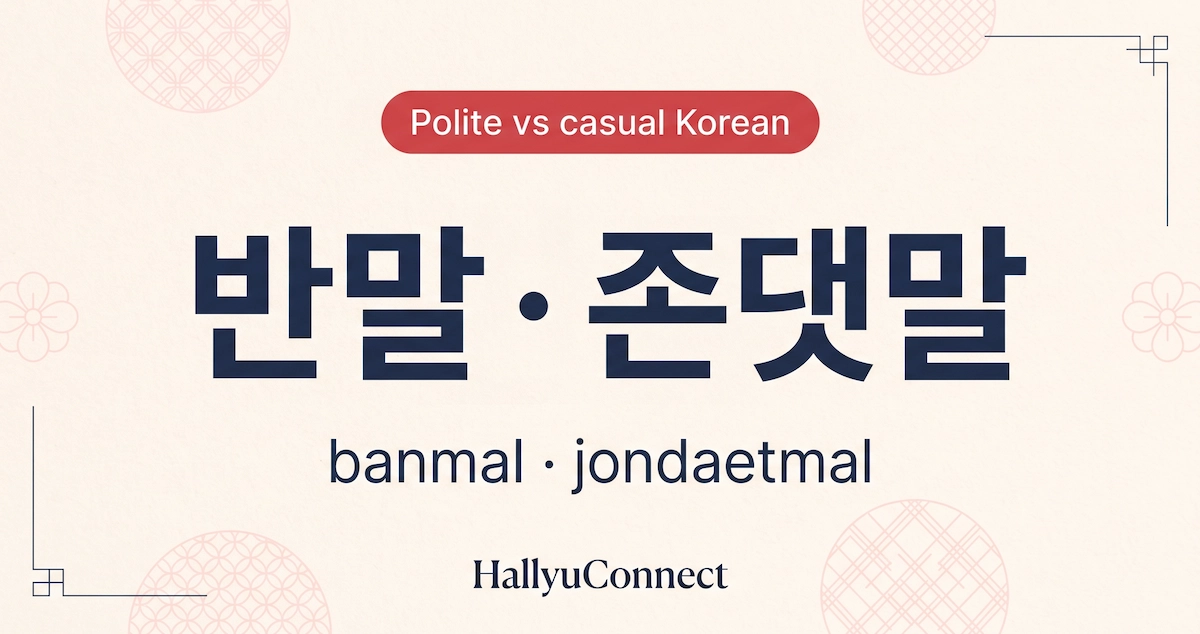
If you’ve already read our guide to polite vs. casual Korean, you know the golden rule: polite speech (존댓말, jondaetmal) is for strangers, colleagues, and elders, while casual speech (반말, banmal) is reserved for close friends, family, and younger people. But in K-dramas, the grammar isn’t just a rule — it’s a weapon, a flirtation, and a massive neon sign pointing to how a relationship is changing.
Because the switch from polite to casual is such a big deal in Korean culture, writers use the exact moment a character “drops the yo” to signal a turning point in the plot. Here are the four most common times you’ll catch characters switching their speech level mid-scene.
Four dramatic reasons to drop the “yo”
1. The accidental slip-up
The shift: A character gets too angry, too scared, or too flustered to remember their manners.
Where you hear it: when a strict boss and an employee are stuck in a terrifying or embarrassing situation together (like a falling elevator or hiding from someone). The junior character blurts out a panicked, casual “What do we do?!” without the polite -yo at the end. Once the danger passes, there’s always a slow, awkward realization that they just spoke casually to their superior.
2. The “we’re friends now” permission
The shift: The older or senior person explicitly invites the younger person to stop being so formal.
Where you hear it: over drinks or late-night food. The senior character smiles and says, “말 편하게 해” (mal pyeonhage hae) — “Speak comfortably.” It’s a huge milestone. The younger character usually hesitates, struggles to drop the polite endings, and gets teased for being too stiff before finally using banmal.
3. The romantic milestone
The shift: A mutual agreement to drop the polite distance between two leads.
Where you hear it: when two characters of similar age realize they have feelings for each other. One of them will softly ask, “우리 말 놓을까요?” (uri mal noeulkkayo?) — “Shall we drop the honorifics?” The moment they start using casual speech, the entire chemistry of the scene changes from “coworkers/acquaintances” to something much more intimate.
4. The disrespectful power move
The shift: Using casual speech to someone you should be polite to, just to show contempt.
Where you hear it: heated arguments and villain standoffs. If a stranger or a junior suddenly drops the “yo” and speaks in banmal, they are picking a fight. The immediate response is almost always a furious, “왜 반말이야?!” (wae banmariya?!) — “Why are you speaking casually?!” It’s the linguistic equivalent of throwing a punch.
A note on pronunciation
I’m a K-drama fan learning Korean, not a native speaker. Romanization only approximates Korean sounds, and navigating polite and casual speech as a learner can be tricky! Use the Hangul as your main guide and listen to a dictionary with audio, such as Naver’s. If you spot a mistake, please tell me through the contact page.
New here? Start with our beginner’s guide to learning Korean from K-dramas.